Few areas of enterprise technology have seen as much investment and attention over the past few years as human resources. Organizations across every industry are modernizing HRIS platforms, deploying AI-powered tools, and reimagining how HR services get delivered. Vendors promise faster onboarding, predictive workforce insights, and self-service experiences that rival the best consumer applications. Yet beneath the enthusiasm for what AI can do, a quieter and more foundational challenge often goes unaddressed: the state of the processes AI is being asked to improve.
HR Transformation Starts with Process
Most HR functions did not arrive at their current state through a single decision. They evolved. A performance management process built for one era coexists with a learning system adopted for another. Benefits administration reflects years of vendor changes and regulatory updates. Approval workflows were designed around the org chart of a prior leadership team. None of these choices were wrong when they were made. The challenge is that they accumulate, layer upon layer, until the HR function is managing not one coherent system but a patchwork of systems, each internally logical but collectively fragmented.
This dynamic is particularly visible across the employee lifecycle, from recruiting through onboarding and into the day-to-day administration of performance, learning, and benefits. What should be a single coherent journey often becomes a series of disconnected handoffs. A candidate's data is re-entered by hand as they move from applicant tracking into the core HR system. Approval routing that looks simple on a process map depends, in practice, on someone remembering to follow up. Reporting that should be automatic requires reconciliation across systems that were never designed to talk to one another. The result is not simply additional work. It is a gradual erosion of an HR team's capacity to focus on people rather than paperwork.
What makes this challenge difficult to address is that it rarely presents itself as a single problem to solve. Teams adapt. Workarounds become standard practice. New HR professionals are trained not on how the function is supposed to work, but on how to navigate the way it actually works. The organization continues to function, often well by every external measure. As a result, the true cost of this complexity, measured in lost capacity, inconsistent employee experience, and slower decision-making, remains largely invisible.
AI Amplifies What Already Exists
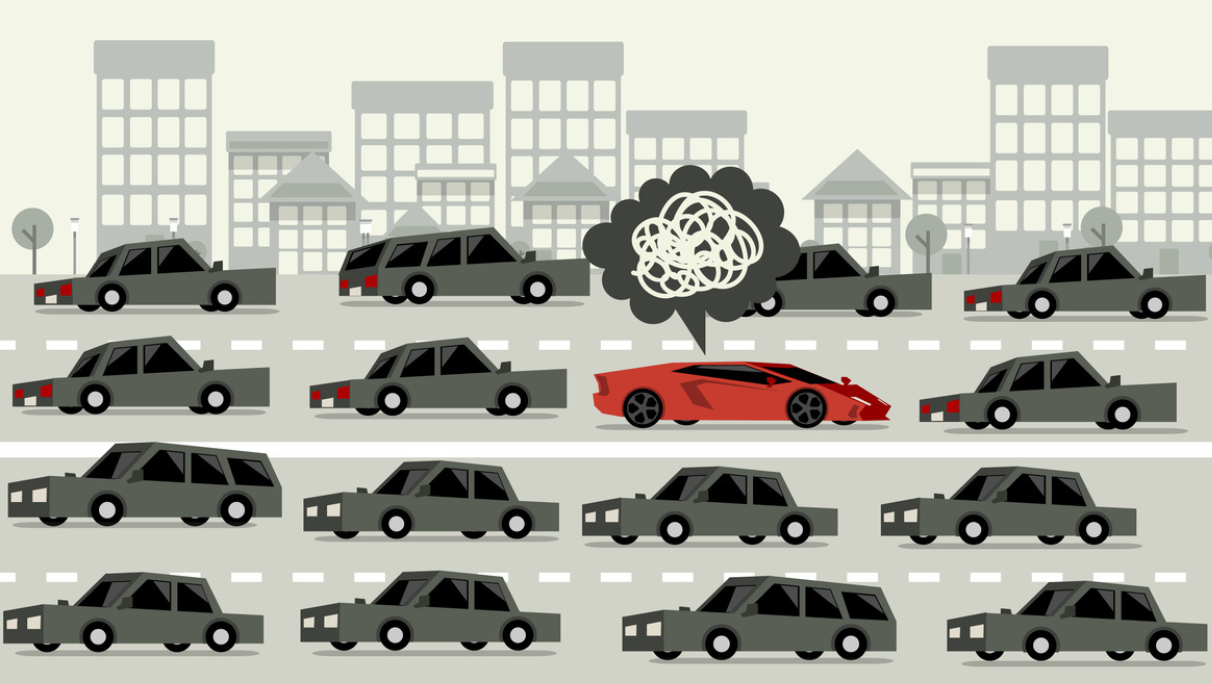
This is precisely the environment into which many organizations are now introducing AI. A chatbot trained on inconsistent policy documentation will simply deliver inconsistent answers more quickly. A predictive model built on fragmented, poorly reconciled workforce data will produce insights that look sophisticated but rest on a shaky foundation. Automation layered onto a broken approval workflow does not fix the workflow; it just moves the friction further downstream. AI is a powerful amplifier. Applied to a well-designed process, it multiplies value. Applied to a fragmented one, it can just as easily multiply confusion.
Building a Foundation for Smarter HR
The organizations seeing the most meaningful results from HR technology investment tend to approach the work differently. Before selecting a platform or deploying an AI capability, they take the time to understand how work is actually being done today, not how it was designed to be done on paper. They identify where process variation adds genuine value and where it simply reflects historical accident. They invest in cleansing and governing the data that will ultimately feed every model and dashboard built on top of it. Only then do they layer in automation and intelligence, onto a foundation built to support it.
Done this way, the results can be significant. AI-powered self-service can resolve routine employee questions instantly and consistently, freeing HR teams to spend more time on complex, judgment-driven work. Predictive workforce analytics can surface early signals on attrition risk or skills gaps well before they become urgent problems. Generative AI can accelerate the drafting of job descriptions, performance summaries, and internal communications, giving HR professionals more time to focus on the people those documents are meant to serve. None of these outcomes depend primarily on the sophistication of the technology. They depend on the discipline applied to the process underneath it.
In many respects, this is what effective HR transformation is ultimately about. While new HRIS platforms, automation tools, and AI capabilities often receive the greatest attention, sustainable transformation happens when organizations deliberately design the processes those technologies are meant to support. As AI adoption accelerates across HR functions in every industry, leaders may benefit from asking a simple question: are we automating HR work, or are we automating the way HR work has always been done?
The distinction matters. Organizations invest in HR technology to build a more strategic function and a better employee experience. Realizing that value depends less on the technology itself and more on the discipline applied to the process it is built upon.
Author

Sam Hoffman
Manager, Business Transformation Solutions