For decades, the modern worker hasn’t faced disruption at the scale we’re seeing today. Before COVID, it was possible to build a long, stable career by relying on deep domain expertise or by being the most technical person on the team. Work largely fit within business hours and problem-solving often happened organically. There was space to think.
Today, that stability feels distant.
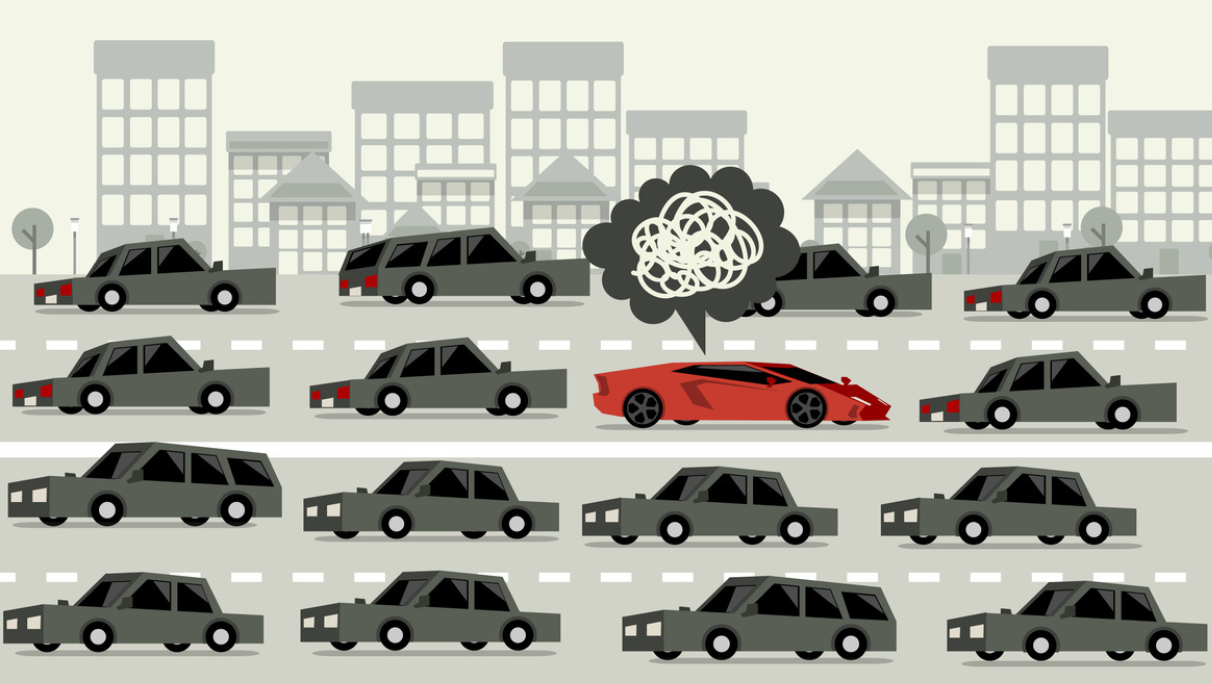
The modern worker is buried in back-to-back meetings, with little uninterrupted time to enter a true flow state, the focused stretches where meaningful progress happens. For high performers, the day often starts earlier and ends later. At the same time, expectations have expanded. Relevance no longer requires just technical skill or business acumen, it requires both. Professionals must communicate clearly across audiences, think strategically, and continuously apply automation and AI to increase efficiency.
AI can absolutely accelerate repetitive work and free people for higher-value contributions. That’s the upside. The tension is what follows. Efficiency often leads to more initiatives, higher expectations, and heavier workloads, pushing people toward overload and diminishing execution quality.
The Psychological Layer
Underneath the productivity conversation is a more personal question: Will AI take my job?
Whether openly acknowledged or not, the concern is real. Nearly half of workers report some level of anxiety about job displacement due to AI. That fear compounds an already strained workforce. High performers carry disproportionate loads. Psychological safety is under pressure. Layoffs and market volatility add to the uncertainty.
The result isn’t just burnout, it’s mental and emotional strain layered on top of professional pressure.
What’s Working Now
Avoiding AI isn’t the answer. Downplaying it isn’t either.
What’s working is intentional enablement.
Organizations seeing progress are doing three things consistently:
- Making AI Practical
Not broad awareness sessions, but hands-on application embedded in real work. When employees use AI in their daily workflows (documentation, analysis, planning, communication) confidence increases. - Creating Space to Learn
Expecting people to “figure it out” on top of already extended workdays increases stress. Allocating protected time for experimentation signals that growth is part of the role. - Framing AI as Augmentation
When leaders clearly position AI as a tool to elevate performance, and invest in developing that capability, fear decreases and adaptability increases.
The shift is powerful. The narrative changes from “Will this replace me?” to “How can this make me better?” Those who evolve with the technology, who build real fluency, not surface familiarity, will be in a far stronger position than those who resist it.
The Path Forward
AI is not slowing down. Neither are expectations. The organizations that thrive won’t be the ones that simply deploy new tools. They’ll be the ones that equip their people to grow with them.
The workforce doesn’t just need efficiency, it needs evolution, and the confidence that comes from being supported in that evolution.
Author
.png?width=221&height=221&name=Copy%20of%20Copy%20of%20Copy%20of%20Copy%20of%20Blog%20Authors%20(5%20x%205%20in).png)
Sandy Merein
Vice President, Solutions & Special Projects
https://www.linkedin.com/in/connectwithsandymerein/