
Recently, Uber made headlines when it was reported that the ride-share giant had burned through its entire annual budget for AI tokens in just four months. As a result, they capped AI usage at $1,500 per employee, per tool, per month. Even Microsoft reportedly canceled Claude Code licenses due to cost overruns.
They’re not alone — or, at least, they soon won’t be. AI may now consume as much as half of all IT spend, but a growing list of organizations are discovering that AI solutions are cost prohibitive. This news generally comes as a shock, largely because companies have not implemented financial controls to track token use.
Fortunately, this scenario is as avoidable as it is common. With the right controls and governance policies in place, organizations should be able to see their token use in real time, across functions and use cases, and be able to keep spending well within predetermined limits.
How We Got Here: Why AI Spending is Out of Control
AI offerings are evolving at an unprecedented rate, and the costs associated with them are changing almost as quickly. The former may be good news for AI-forward organizations, but the latter has shown that tech and financial leaders alike are unprepared for AI’s skyrocketing costs.
In fact, Saas and AI spend-optimization platform Zylo reports that AI costs rose by 108% in 2025, and 78% of IT leaders have experienced unexpected charges related to AI use. This statistic may seem surprising, especially considering that prior to the AI revolution, a tech leader who didn’t have a firm grasp on their technology costs was virtually unheard of.
So what makes the cost of AI so different from the costs associated with, say, typical enterprise SaaS?
Token Pricing is Complex — and Completely New
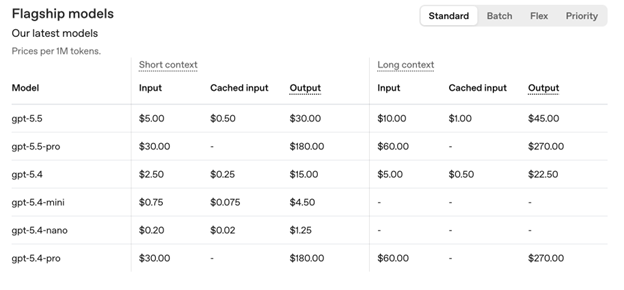
One factor is the staggering complexity of token-based pricing. Consider these two examples of token pricing tables from the providers of two of today’s flagship models:
OpenAI Token Pricing
Anthropic Token Pricing
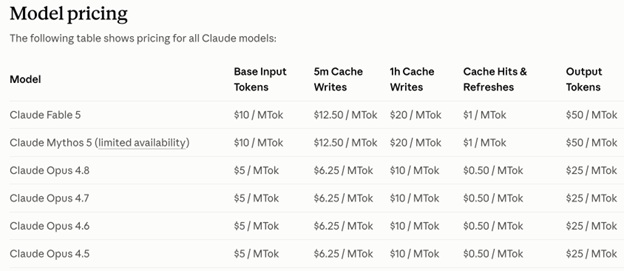
It’s easy to see how tracking these costs can be difficult for teams of any size: Not only does token pricing differ across models and context levels, it also varies across input tokens, output tokens, cache writes, and more. In some cases, costs can also differ for image or video generation, transcription, and multimodal models, to name a few.
FinOps Teams Aren’t Equipped to Measure Token Use
Yet another factor that often leads to surprise AI costs is the novelty of the token-as-currency concept. A “token” isn’t a unit of value that means much to financial teams, and it’s easy to see why: A token, generally, is equivalent to about four characters of English text, so this article would be worth about 2,600 tokens.
Of course, things like white space and markdown also consume tokens, and token use is higher for languages that don’t use the Latin alphabet. On top of that, each AI provider may measure token consumption differently, including variable rates for input tokens, output tokens, cache reads, and more.
For finance teams used to dealing in dollars and cents, all of this variability is often as mystifying as it is unmeasurable.
Companies Don’t Know What They’re Spending on AI — or How to Find Out
These factors — along with rapid price changes, model improvements, and lack of visibility into which teams are using which solutions — add up to a sobering reality: Many organizations today don't have a clear picture of what’s being spent on AI, by which teams, and to what end.
Eliassen’s latest survey of U.S. technology leaders, conducted in June 2026, found that the median monthly AI spend for organizations of all sizes is roughly $69,000. Organizations with $1B or more in annual revenue report spending a median of almost $119,000 a month on AI tools, usage, and infrastructure. On the lowest end of the spend spectrum, companies at or below $10M in annual revenue spend almost $45,750 each month.
These organizations may know what their total costs are at the end of a given month or quarter, but can they track AI token spend from one day to the next or from one team to another?
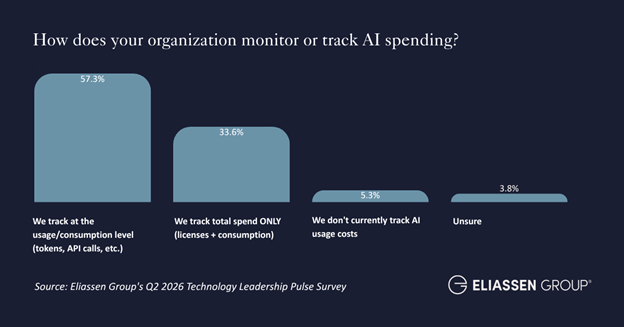
Only a slim majority actually can. 57% of companies surveyed track spend at the token level, while 34% track total costs only — and 5% say they don’t track AI usage costs at all.
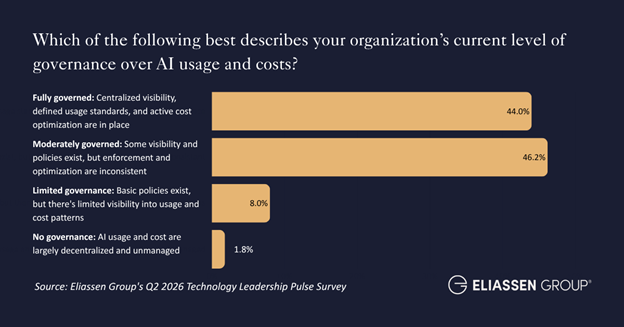
More concerning still, when asked what cost controls around AI use exist within their organizations, 46% said that “some visibility and policies exist, but enforcement and optimization are inconsistent.” And while 57% said their AI governance policies included centralized tracking of AI usage and costs, the remaining 43% of organizations may be in for a surprise when the token bill comes due.
How to Get a Handle on Your AI Token Use
Given all the obstacles outlined here, it’s easy to see why organizations often struggle to get clarity on their AI spend — and struggle even more to control it. Fortunately, there are several concrete steps companies can take today to get their AI costs under control.
1. Implement an Observability/Visibility Layer
You can't manage what you can't see, so gaining visibility into token usage is a foundational priority for organizations of any size. Implementing tools like Langfuse or Helicone can be a smart first step, as these can provide end-to-end tracing, cost tracking, and per-request visibility into what's actually happening in your LLM calls.
For example, these can often show you that a given workflow costs $.39 with 10 API calls, or that your team has spent X amount of tokens — equal to Y amount of dollars — in a given time period. It’s worth noting that Helicone runs as a proxy in front of your API calls, giving cost breakdowns, latency percentiles, and user-level tracking. Langfuse, on the other hand, offers deeper, span-level tracing more suited to multi-step agent workflows.
2. Deploy an AI Gateway in the Request Path for Enforcement
While observability platforms report on spend, gateways can prevent it. A traditional FinOps alert may notify leaders of a cost overrun, but it likely contains no attribution to the model or prompt that caused it. Gateway-level enforcement, however, doesn’t send an alert but prevents the overrun from occurring in the first place. Each request triggers an automated review of budget policy, and any request that would exceed the limit never reaches the provider.
Gateways like Portkey or TrueFoundry add token-aware quota enforcement per user/key/team, cost attribution, and intelligent routing across providers based on cost and latency.
3. Right-Size Your Model Selection (intelligent routing)
The FinOps Foundation emphatically states that most workloads don’t require frontier models, and that probably includes most of yours.
In these cases, opting for leaner, cheaper models can be a high-impact optimization for organizations looking to control token costs. The consumption metric to track is what practitioners at FinOps X 2026 called the "route win rate." It’s the share of requests sent to a cheaper utility-tier model without quality loss, targeted at roughly 70% or higher. In these cases, shifting routine work away from a $5/$30 flagship model and onto something in the $0.10–$1.50 range is just smart money.
4. Exploit “Cache and Batch” Pricing
Though it’s less of a financial control and more of a cost-cutting strategy, tech leaders may consider taking advantage of discounted rates for context caching reads and batch pricing (when offered).
Batch pricing works by allowing users to submit a collection of requests as a single asynchronous job, rather than in real time. These are processed asynchronously within a specified turnaround window — typically up to 24 hours — and the results are returned when the job completes. In exchange for giving the AI provider that scheduling flexibility, they often offer discounts of around 50% off both input and output tokens.
Context caching can also cut input costs significantly. Unlike batch processing, context caching occurs when you make repeated requests that share a large, identical chunk of input at the front — like a long system prompt, a lengthy reference document, or a codebase. This enables the provider to store the model's internal representation of that shared prefix after the first request and reuse it on subsequent requests, instead of reprocessing those tokens from scratch every time.
Though best suited for low-priority requests, this “cache and batch” strategy can be a major driver of savings on token spend.
5. Build and Empower the AI FinOps/Governance Discipline
There’s one more crucial layer of oversight to add: a robust AI FinOps and Governance discipline. This function essentially aggregates all of the responsibilities we’ve laid out here and serves as an overarching cost control for all of an organization’s AI operations.
For organizations that are new to AI FinOps — which is almost all of them — the experts at the The FinOps Foundation recommend adopting a crawl-walk-run methodology:
- Crawl: Gaining visibility into total and daily costs
- Walk: Instituting workload-level attribution, model right-sizing, and basic optimizations
- Run: Leveraging internal “tokenomics” (cost per token, input/output ratio, cached-token ratio), controlling spend via tech platforms, and more.
In its final, most mature state, AI FinOps should maintain visibility into and control over AI spend, provide reporting on value derived from AI tools and use cases, and deliver data that can drive decision-making around token usage, model selection, and more.
Takeaways for Tech Leaders
Despite the difficulties associated with controlling AI spend, organizations are still racing to gain an AI advantage. But while the first stages of that race were dominated by early adopters and strategic experimenters, companies that manage to cross the finish line will be those that institute rigorous controls around token use.
These controls may not be as exciting as testing out a new model or vibecoding tools in minutes, but they’re no less vital for achieving any real success with AI.
Fortunately, with the right governance, policies, and tools in place, companies can not only get a handle on their AI spend but also begin attributing value to different AI solutions and use cases and demonstrating measurable ROI on AI investments.